
Call us now :08045816760
 Send Inquiry
 Send Inquiry
Compound Fertilizer
Compound Fertilizer Specification
- Physical Form
- Granules or powder
- Storage
- Store in a cool dry place away from direct sunlight
- Poisonous
- NO
- Density
- 1.6 Gram per cubic centimeter(g/cm3)
- Appearance
- Typically white gray or brown granules
- Ph Level
- Neutral to slightly acidic (depends on formulation)
- CAS No
- N/A (mixture)
- Usage
- Used to enhance soil fertility and provide nutrients to plants
- EINECS No
- N/A (mixture)
- HS Code
- 3105.20
- Molecular Formula
- NPK (Nitrogen Phosphorus Potassium)
- Purity
- Depends on specific formulation (e.g. 99% purity for certain components)
- Properties
- Contains essential nutrients like Nitrogen Phosphorus and Potassium in varying ratios
- Solubility
- Partially soluble in water
- Shape
- Granular or powdered
- Grade
- Agricultural grade
- Application
- Agriculture horticulture gardening
- Molecular Weight
- Varies depending on composition
- Smell
- Mild
- Taste
- Neutral
- Ingredients
- Nitrogen Phosphorus Potassium and other trace elements
- Shelf Life
- 23 years under recommended storage conditions
About Compound Fertilizer
Compound Fertilizer
Specification
| packaging type | standard |
| Product | Compound fertilizer |
| Country of Origin | Made in India |
| Packaging Size | as per requirement |
| Material | Compound fertilizer |
| Usage/Application | Agriculture |
Nutrient-Rich Formula for Diverse Crops
This compound fertilizer provides an optimal blend of nitrogen, phosphorus, and potassium, the three key macronutrients vital for robust plant development. With the addition of trace elements, it caters to the nutritional needs of various crops in agriculture, horticulture, and gardening. Its carefully balanced ratios are designed to support healthy root growth, flowering, and fruiting throughout the cultivation cycle.
Convenient Application and Storage
Available in granular or powdered form, the fertilizer is easy to handle and can be applied using multiple methods, such as broadcasting or mixing into soil. Partial solubility ensures a steady nutrient supply. For best results, store the product in a cool, dry environment away from direct sunlight, which preserves its efficacy and extends its usable life to 23 years.
FAQs of Compound Fertilizer:
Q: How should compound fertilizer be applied to crops for best results?
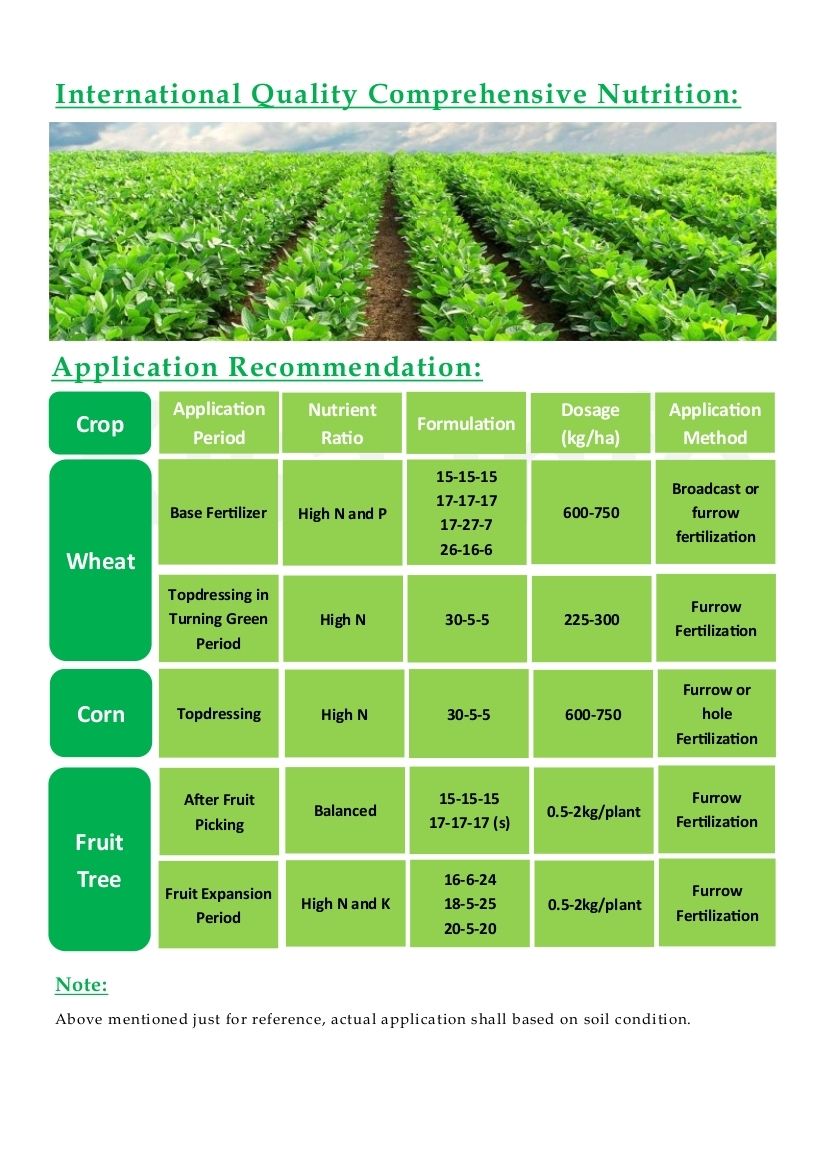
A: For optimal effect, evenly distribute the granules or powder around the root zone of plants, either by broadcasting over the soil or by mixing into the top layer. Always water the area after application to facilitate nutrient uptake.Q: What are the primary benefits of using this compound fertilizer?
A: This fertilizer enhances soil fertility by providing a balanced supply of essential nutrients (nitrogen, phosphorus, potassium, and trace elements), promoting healthier, more vigorous plant growth and improved crop yields.Q: When is the optimal time to apply compound fertilizer in the cultivation cycle?
A: Apply during early growth stages, before planting, or at key growth milestones such as flowering or fruiting, to ensure that plants receive the nutrients they require for development.Q: Where can this fertilizer be used effectively?
A: It is suitable for a broad range of applications in agriculture, horticulture, and gardening, supporting a variety of crops and ornamental plants in field or garden settings.Q: What process is involved in the nutrient release from this fertilizer?
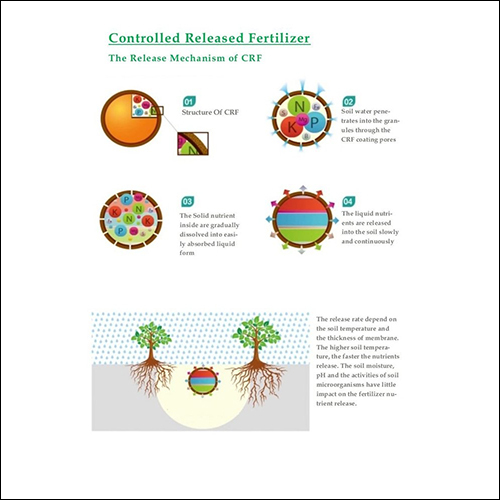
A: Because it is partially soluble in water, the fertilizer gradually releases nutrients, providing plants with a steady supply over time and reducing the risk of runoff or wastage.Q: Is this fertilizer safe to handle and use around edible crops?
A: Yes, the fertilizer is non-poisonous and safe for agricultural use, including edible crops, when applied according to recommended guidelines. Basic precautions, such as wearing gloves during handling, are advised.Q: How should the product be stored to maintain its quality and shelf life?
A: Store the fertilizer in a cool, dry place away from direct sunlight and moisture. Proper storage ensures effectiveness for 23 years.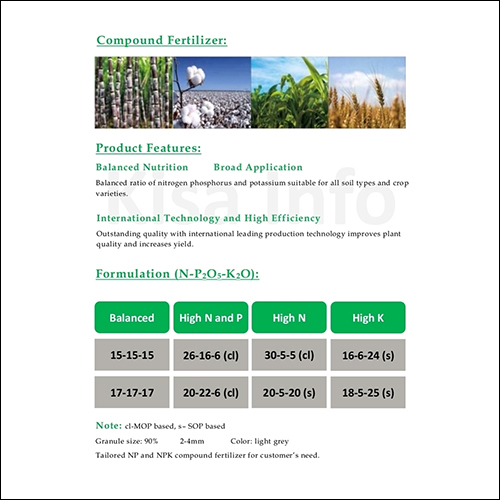
Tell us about your requirement

Price:
Quantity
Select Unit
- 50
- 100
- 200
- 250
- 500
- 1000+
Additional detail
Mobile number
Email

More Products in Water Soluble Fertilizer Category
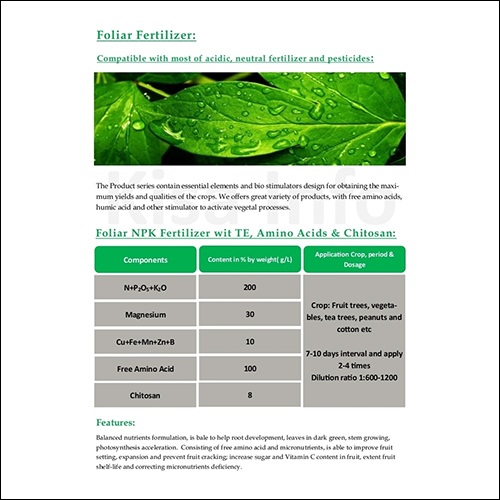
Foliar Fertilizer
Purity : Variable depending on the formulation typically 99%
Molecular Formula : Not Applicable
HS Code : 31052000
Structural Formula : Not Applicable
Properties : Enhances plant growth improves nutrient absorption stress resilience in plants
Solubility : Completely soluble in water
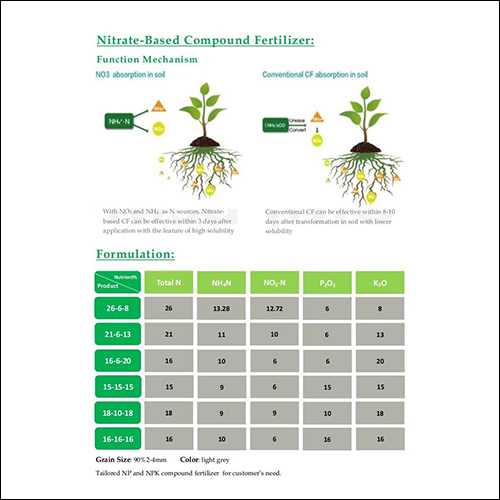
Nitrate Based Compound Fertilizer
Purity : 99%
Molecular Formula : NN
HS Code : 3102.30
Structural Formula : NaNO
Properties : High nitrogen content supports plant growth.
Solubility : Highly soluble in water
Controlled Released Fertilizer
Purity : Typically 9099% active nutrient components
Molecular Formula : N/A (composite mixture: nitrogen phosphorous potassium)
HS Code : 3105.90.00
Structural Formula : N/A (composite of multiple compounds)
Properties : Slow release of nutrients controlled absorption prevents overfertilization
Solubility : Partially soluble in water (controlled release)
Water Soluble Fertilizer (WSF)
Purity : Depends on composition typically 9899%
Molecular Formula : Varies depending on composition commonly includes NPK compounds (e.g. NH4NO3 K2SO4).
HS Code : 3105.20.00 (for fertilizers containing NPK compounds)
Structural Formula : Not applicable due to mixture composition
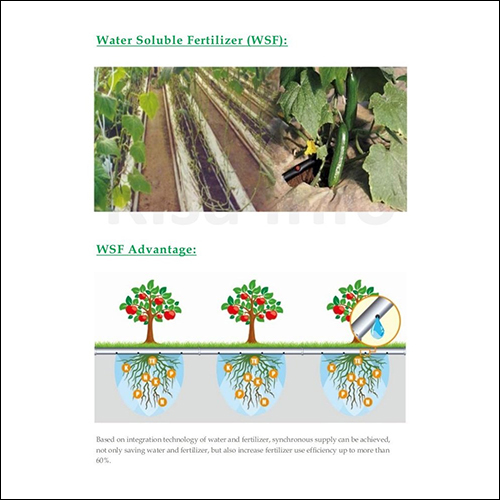
Properties : Promotes plant growth enhances nutrient absorption and is quickly absorbed by roots and leaves.
Solubility : Fully watersoluble

 Send Inquiry

B-27, Shantisagar Apt, Nehru Road, Savarkar Lane, Dombivli (East), Thane - 421201, Maharashtra, India

Mr. Mehul Mehta
(Proprietor)
Mobile :08045816760
 Send Inquiry
 Send SMS
Developed and Managed by Infocom Network Private Limited.
